

News
-
 22-05-2025
A return to the traditional Mediterranean diet in Greece offers a powerful opportunity to address both environmental and public health challenges. Research using the FABLE Calculator shows that widespread dietary change could reduce agricultural greenhouse gas emissions by up to 60% by 2050, primarily through lower meat consumption and more efficient land use.
Despite the country’s heritage, modern dietary habits—especially among younger generations—have drifted from Mediterranean principles, contributing to rising chronic disease rates and environmental stress.
Adopting this diet not only supports climate goals but also promotes healthier lifestyles. Strategic policies, public awareness, and support for local food systems are essential to realizing these benefits and creating a more sustainable future for Greece.
Authors: Prof. Koundouri ,Dr. Dellis & Christopher Deranian
Editors: Vicky Markolefas
Published on: May 22, 2025
Read the full article: Click here
Published by: 360infoOriginally published under Creative Commons Attribution 4.0 by 360info™.
This article is part of the Science-Policy Briefs series, produced through the collaboration between the Alliance of Excellence for Research and Innovation on Aeiphoria (AE4RIA), an alliance of prestigious research and innovation institutions, and 360info, a not-for-profit wire service delivering free, research-based, solutions-focused journalism by experts. The series aims to translate cutting-edge scientific research into accessible, actionable insights for policymakers and the wider public, supporting evidence-informed decision-making on key sustainable development challenges.
Photo: ©Vasilis Caravitis /Unsplash
-
 20-05-2025
The Adaptation Investment Cycle (AIC) — a strategic investment planning tool developed through our Horizon Europe Pathways2Resilience project.
With €738 billion in climate-related losses since 1980, and adaptation finance making up less than 5% of global climate funding, urgent investment is essential.
The AIC enables smarter, faster, and more effective climate action — helping to protect communities and economies across Europe.
By: Maria Chourdaki, Dr. Dellis & Prof. Koundouri
Published on: May 20, 2025
Read the full article: Click here
Published by: 360infoThis article is part of the Science-Policy Briefs series, produced through the collaboration between the Alliance of Excellence for Research and Innovation on Aeiphoria (AE4RIA), an alliance of prestigious research and innovation institutions, and 360info, a not-for-profit wire service delivering free, research-based, solutions-focused journalism by experts. The series aims to translate cutting-edge scientific research into accessible, actionable insights for policymakers and the wider public, supporting evidence-informed decision-making on key sustainable development challenges.
-
 14-05-2025
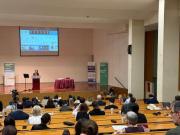
On April 29, 2025, a high-level international conference on hydrogen and sustainable energy took place at the Athens University of Economics and Business (AUEB), as part of a broader three-day European collaboration. The event, titled “Shaping Europe’s Sustainable Energy Future through Hydrogen”
-
 13-05-2025
The MaritimeGCH model, developed by the UN SDSN Global Climate Hub, is a powerful decision-support tool designed to help shipowners navigate the complex decarbonization landscape shaped by evolving EU and IMO regulations.
With Greece operating nearly 18% of the global shipping fleet, the country is uniquely positioned to lead in sustainable maritime transport. However, the analysis highlights critical gaps in Greece’s national strategy and emphasizes the urgent need for stronger policy support and international collaboration.
-
 12-05-2025
Greece’s Climate Targets at Risk Without Cross-Sector Integration
Greece’s ambitious goal of achieving climate neutrality by 2050 is under threat due to fragmented policymaking across the energy, agriculture, and water sectors. While the National Energy and Climate Plan (NECP) outlines a shift to renewables and decarbonisation, it often overlooks critical cross-sector dependencies—such as how agricultural practices affect water and energy use.
A new analysis by the UN Sustainable Development Solutions Network (SDSN) using integrated systems modelling reveals that current policies lack coordination, risking inefficiencies and missed opportunities. For example, agriculture policy doesn’t fully consider its emissions or energy and water demands, and energy plans miss key variables like land and water needs.
Delays and weak implementation of water management strategies further compound these issues. The European Commission has also highlighted the need for better coordination among Greek ministries.
Experts stress that a systemic, science-informed approach is essential. Aligning policies across sectors can help Greece build a resilient, sustainable economy that meets its climate goals.
Authors: Angelos Alamanos, Prof. Koundouri , Ioannis Arampatzidis, Stathis Devves
Editors: Vicky Markolefas & Namita Kohli
Published on: May 12, 2025
Read the full article: Click here
Published by: 360infoOriginally published under Creative Commons Attribution 4.0 by 360info™.
This article is part of the Science-Policy Briefs series, produced through the collaboration between the Alliance of Excellence for Research and Innovation on Aeiphoria (AE4RIA), an alliance of prestigious research and innovation institutions, and 360info, a not-for-profit wire service delivering free, research-based, solutions-focused journalism by experts. The series aims to translate cutting-edge scientific research into accessible, actionable insights for policymakers and the wider public, supporting evidence-informed decision-making on key sustainable development challenges.
Photo: ©Evangelos Mpikakis/Unsplash
-
 12-05-2025
How prolonged droughts are intensifying flood risks—and how political inertia is hindering the adoption of well-known solutions such as nature-based defenses and improved planning.
Authors: Prof. Koundouri & Dr. Alamanos
Editors: Vicky Markolefas & Samrat Choudhury
Published on: May 12, 2025
Read the full article: Click here
Published by: 360infoOriginally published under Creative Commons Attribution 4.0 by 360info™.
This article is part of the Science-Policy Briefs series, produced through the collaboration between the Alliance of Excellence for Research and Innovation on Aeiphoria (AE4RIA), an alliance of prestigious research and innovation institutions, and 360info, a not-for-profit wire service delivering free, research-based, solutions-focused journalism by experts. The series aims to translate cutting-edge scientific research into accessible, actionable insights for policymakers and the wider public, supporting evidence-informed decision-making on key sustainable development challenges.
Photo: ©Wikimedia Commons
-
 06-05-2025
Authors: Prof. Koundouri, Dr. Dellis & Dr. Triantafyllidou’s
Editors: Vicky Markolefas & Samrat Choudhury
Published on: May 06, 2025
Read the full article: Click here
Published by: 360info -
 02-05-2025
In a recent interview with NAFTEMPORIKI, Prof. Phoebe Koundouri discussed Greece’s primary budget surplus, describing it as a strong signal of economic health and a crucial step toward attracting foreign investment and enhancing economic resilience.
-
 02-05-2025
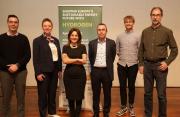
An exciting and inspiring three-day visit 28-30 April 2025 at the Athens University of Economics and Business (AUEB), where our AE4RIA team had the pleasure of hosting Prof. Dr. Phoebe Koundouri’s colleagues from the DTU – Technical University of Denmark, Department of Technology, Management and Economics DTU Management – Energy Economics and Modelling Division.
-
 30-04-2025
Prof. Phoebe Koundouri is truly honoured to have been selected as one of the 32 inaugural Ambassadors for the European Research Council (ERC).
- ‹ previous
- 6 of 40
- next ›
 76 Patission Str.
 30 2108203 455